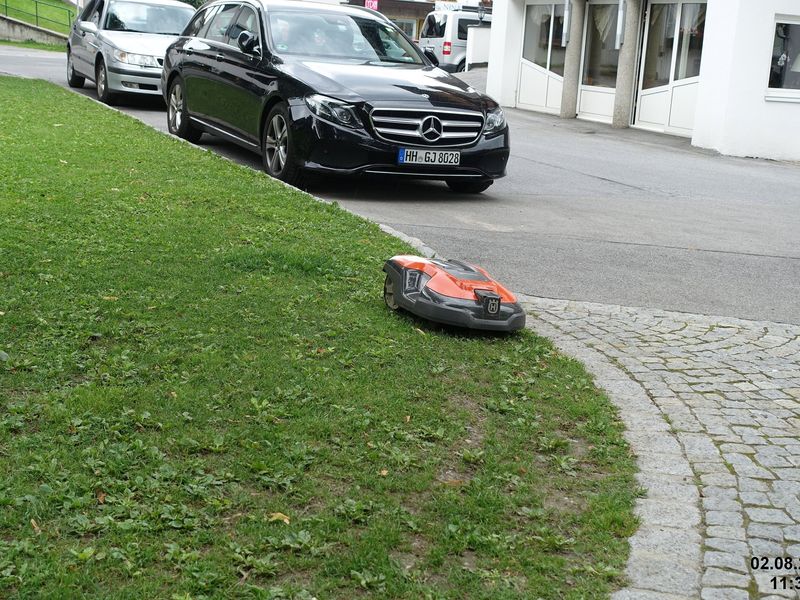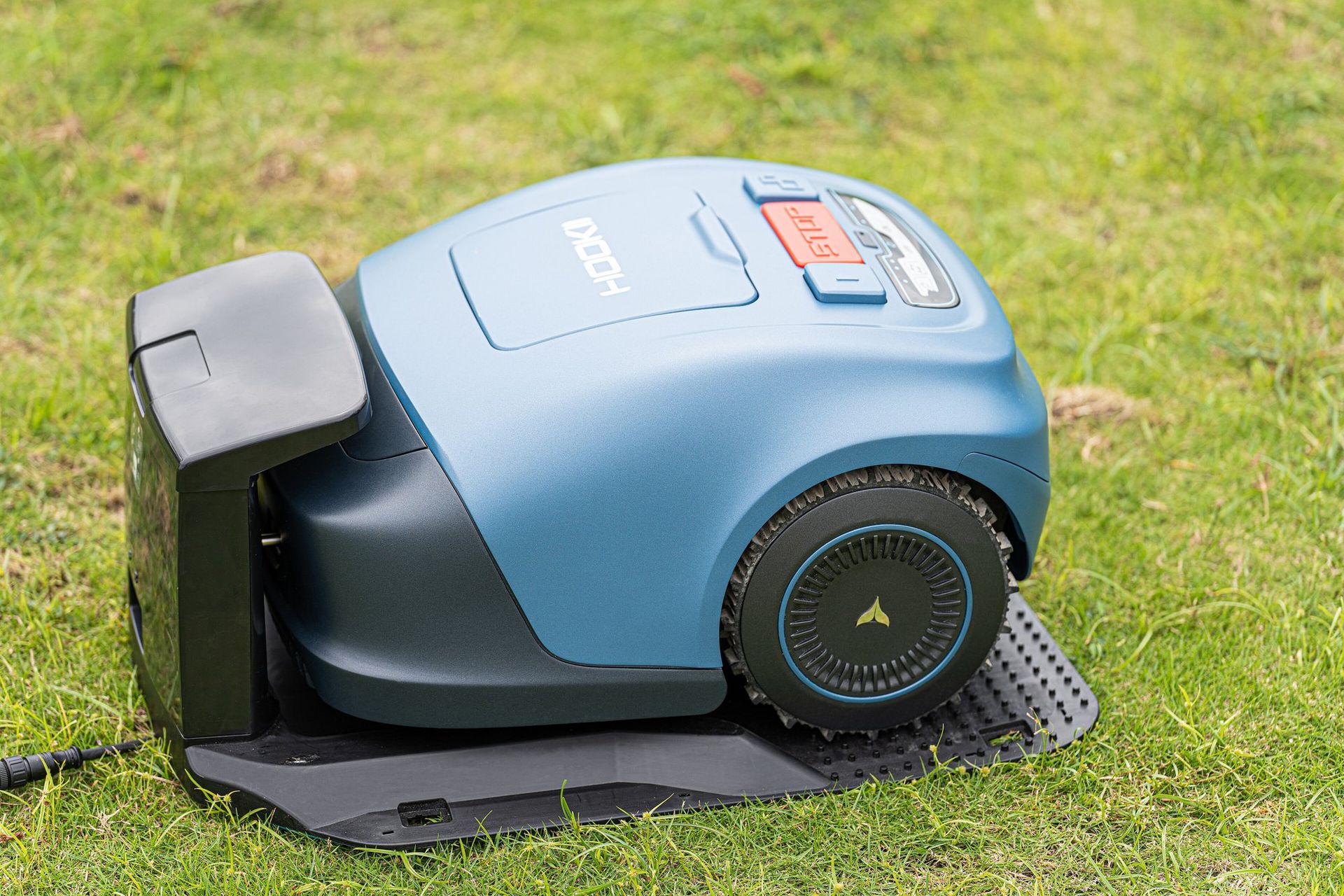
A robot mower is only as good as its sense of place. If it does not know exactly where it is, it misses strips, wanders into flower beds or gets stuck in the same corner every day. For twenty years almost every robot solved this with a buried boundary wire. Since 2023 the market has moved fast towards wire-free machines that use satellites, lasers and cameras instead — and today most new models in our robot mower catalog need no wire at all.
The catch: every system has a weak spot, and the right choice depends far more on your garden than on the brochure. Below we explain how each technology works, what it needs, and where it struggles. If you are still deciding which mower to buy, our guide on how to choose a robot mower for your yard walks through the whole decision.
1. Boundary wire: the proven classic
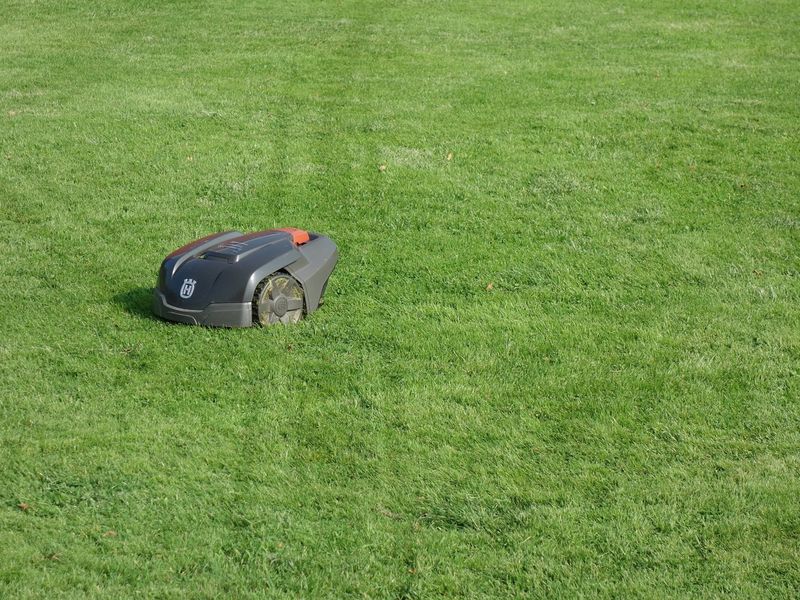
A thin cable is pegged or buried around the edge of the lawn and around beds you want to protect. A low-voltage signal runs through it; the mower senses the field and turns when it reaches the wire. A second guide wire helps it find the way back to the dock.
- Strengths: works under dense trees, next to tall walls and in any weather; no subscription, no antenna; very mature software.
- Weaknesses: installation takes hours or days; the wire gets cut by spades and aerators; changing the layout means digging again; most wired mowers mow in a random pattern rather than straight lines.
Most of the classic Husqvarna Automower range, GARDENA SILENO and Bosch Indego still work this way, and for small, heavily shaded gardens it remains a sensible, cheap option.
2. RTK GPS: centimetre accuracy from the sky
Ordinary GPS is accurate to a few metres — useless for mowing. RTK (Real-Time Kinematic) fixes that with a second, stationary receiver: a reference station on your roof or a pole. Both receivers see the same satellites; the station knows it is not moving, so it can calculate the error and send a correction to the mower several times per second. The result is 1–3 cm accuracy with a clear view of the sky.
RTK enables the things buyers love: virtual boundaries drawn in an app, multiple zones, no-go areas that you can change in seconds, and neat parallel stripes. Read our deep dive on RTK navigation for the details.
Network RTK (sold as NetRTK, RTKⁿ or RTK Cloud) removes the home station: corrections come over the internet from a network of professional base stations, which is why many of these mowers have a built-in 4G modem. WORX Landroid Vision Cloud and Kress RTKⁿ models work like this.
- Strengths: precise, systematic mowing; virtual maps; easy to change zones; scales to very large lawns.
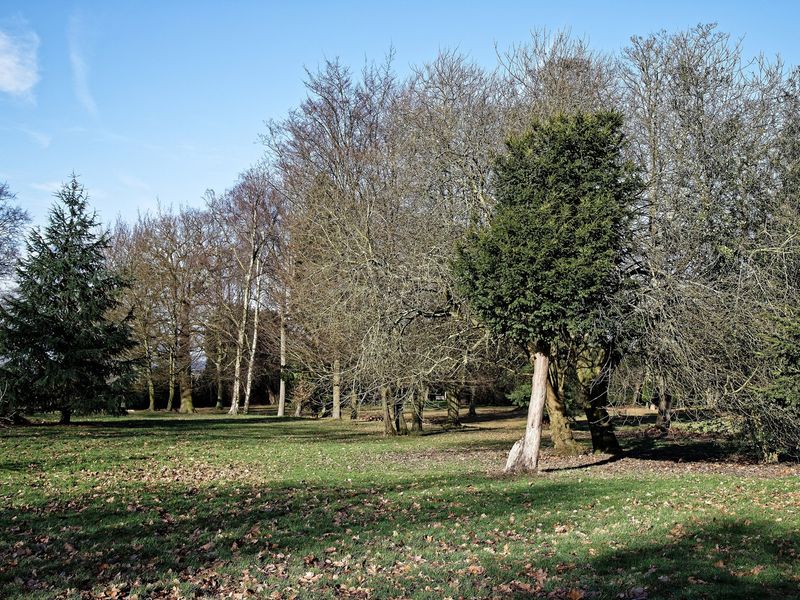
- Weaknesses: needs open sky. Under big trees, next to a house wall or under a carport the satellite signal is blocked or reflected and the mower loses its fix. The station needs power and a good mounting spot; network RTK may need mobile coverage.
3. RTK + vision: the current mainstream
To cover the RTK blind spots, most mid-range and premium wire-free mowers now pair satellites with cameras. When the RTK signal drops, the mower keeps going on visual odometry / VSLAM — it recognises features around it and estimates how far it has moved. The same cameras run AI obstacle detection, so the mower slows down for toys, hedgehogs and garden furniture.
Mammotion LUBA, Navimow, Sunseeker X, Roborock RockMow X115H/X130H and many others use this combination. It is the best all-round choice for typical suburban gardens with a mix of open lawn and some trees — see RTK + vision mowers.
4. 3D LiDAR: mapping with lasers
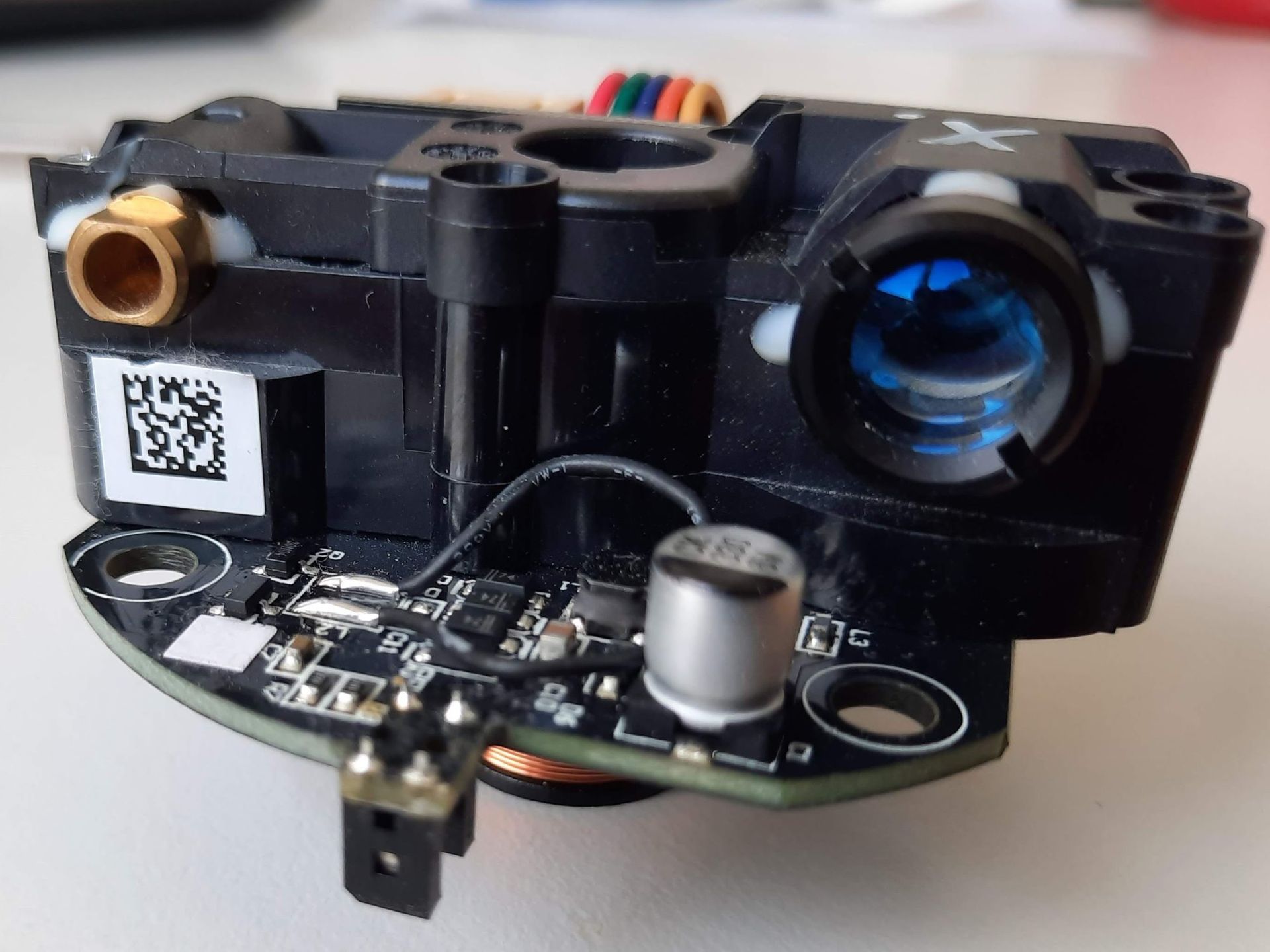
A LiDAR sensor spins and fires laser pulses hundreds of thousands of times per second, building a 3D point cloud of walls, trees, fences and furniture. The mower localises itself against that map — like a robot vacuum does indoors, but outdoors and in 3D. Because it does not depend on satellites, LiDAR is excellent under trees and between buildings, and it works at dusk and at night.
In 2025–2026 LiDAR went mainstream: Dreame A3 AWD, MOVA LiDAX Ultra, Ecovacs GOAT LiDAR PRO, Roborock RockMow X120H and Mammotion's LUBA 3 all use it, often without any RTK station at all.
- Strengths: no antenna, quick setup, great in shade and complex gardens, good obstacle detection.
- Weaknesses: large open lawns with few landmarks give the laser little to lock onto; the sensor sits on top of the mower and can be damaged; some early units disliked strong heat or heavy rain. More in our LiDAR guide.
5. Pure vision: cameras only
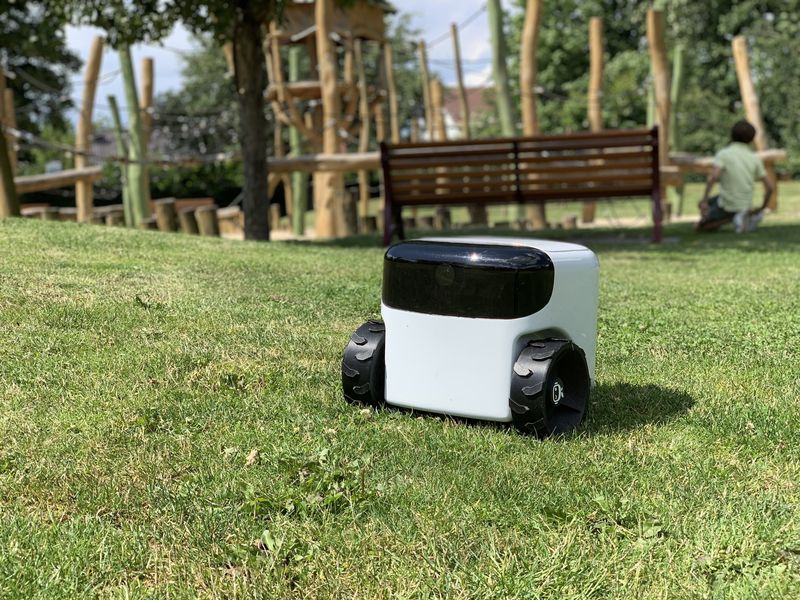
The cheapest wire-free approach uses only cameras and AI. The mower learns where the grass ends by recognising the lawn edge, path and bed borders, and maps the garden from what it sees. eufy E15 and E18, the Sunseeker V-series and Bosch's small VISIMOW work this way.
- Strengths: no wire, no station, no subscription, very simple setup; low price.
- Weaknesses: needs daylight and clear lawn edges; struggles where grass runs into gravel or meadow without a visible border; usually limited to small and mid-size lawns. See vision navigation.
Navigation systems at a glance
| Boundary wire | RTK / network RTK | RTK + vision | 3D LiDAR | Vision only | |
|---|---|---|---|---|---|
| Setup | Hours–days | 30–60 min + station | 30–60 min + station | 15–30 min | 10–20 min |
| Under trees | Excellent | Weak | Good | Excellent | Good |
| Large open lawns | Good | Excellent | Excellent | Good | Limited |
| Night mowing | Yes | Yes | Partly | Yes | No |
| Mowing pattern | Mostly random | Straight lines | Straight lines | Straight lines | Lines / mixed |
| Change zones | Dig the wire | In the app | In the app | In the app | In the app |
| Typical price | Low–mid | Mid–high | Mid–high | Mid–high | Low |
How to test your garden before you buy
- Check the sky. Stand in the shadiest part of the lawn at midday. If you see mostly leaves or walls above you, RTK alone will struggle there.
- Look at the edges. Clear borders (paths, bed edging, walls) help vision mowers. Grass that fades into meadow or gravel does not.
- Count the zones. Several separate lawns connected by paths are easier with RTK or LiDAR maps than with a wire.
- Think about the station. RTK stations need power and a spot with an open sky; network RTK needs mobile coverage.
- Check firmware support. Navigation keeps improving through updates — see our firmware update tracker, and the error codes guide for what a lost RTK fix looks like in practice.
When you have a shortlist, put the models side by side in our comparison tool or start from our lists of the best robot mowers for large lawns and for slopes.
Bottom line
There is no single best navigation system — only the best one for your lawn. RTK + vision is the safest all-rounder for open and mixed gardens, LiDAR wins under trees and between buildings, vision-only mowers are a simple budget choice for small lawns, and the boundary wire is still the most robust option when nothing else can see the sky.
Frequently asked questions
Do wire-free robot mowers work under trees?
Pure RTK mowers often lose their position under dense canopies. Models that combine RTK with cameras, or that use 3D LiDAR, handle shaded areas much better.
Do I need a subscription for an RTK mower?
Not with a home RTK station. Network-RTK mowers use mobile data; many brands include several years of 4G service, after which a subscription may apply.
Can a robot mower mow at night?
Wired, RTK and LiDAR mowers can. Vision-only mowers need daylight. Many owners avoid night mowing anyway to protect hedgehogs and other wildlife.
Is LiDAR better than RTK?
Not universally. LiDAR is better in shade and complex gardens; RTK is better on large, open lawns with few landmarks. Many 2026 flagships combine both.
We have been mowing lawns for 32 years — from a hand scythe to today’s RTK, LiDAR and vision robots. We compare, set up and troubleshoot robot mowers so you can pick the right one for your garden.